80% Open Space: The Claim Every Developer Makes and What It Actually Means
Walk through any North Bangalore project site office in 2026 and you will see '80% open space' everywhere. Two projects — on 5 acres and 25 acres — can both truthfully make that claim. The buyer experience is completely different. Here is how to calculate what it actually means.
Walk through any North Bangalore project site office in 2026 and you will see "80% open space" on the hoarding, in the brochure, and in the sales presentation.
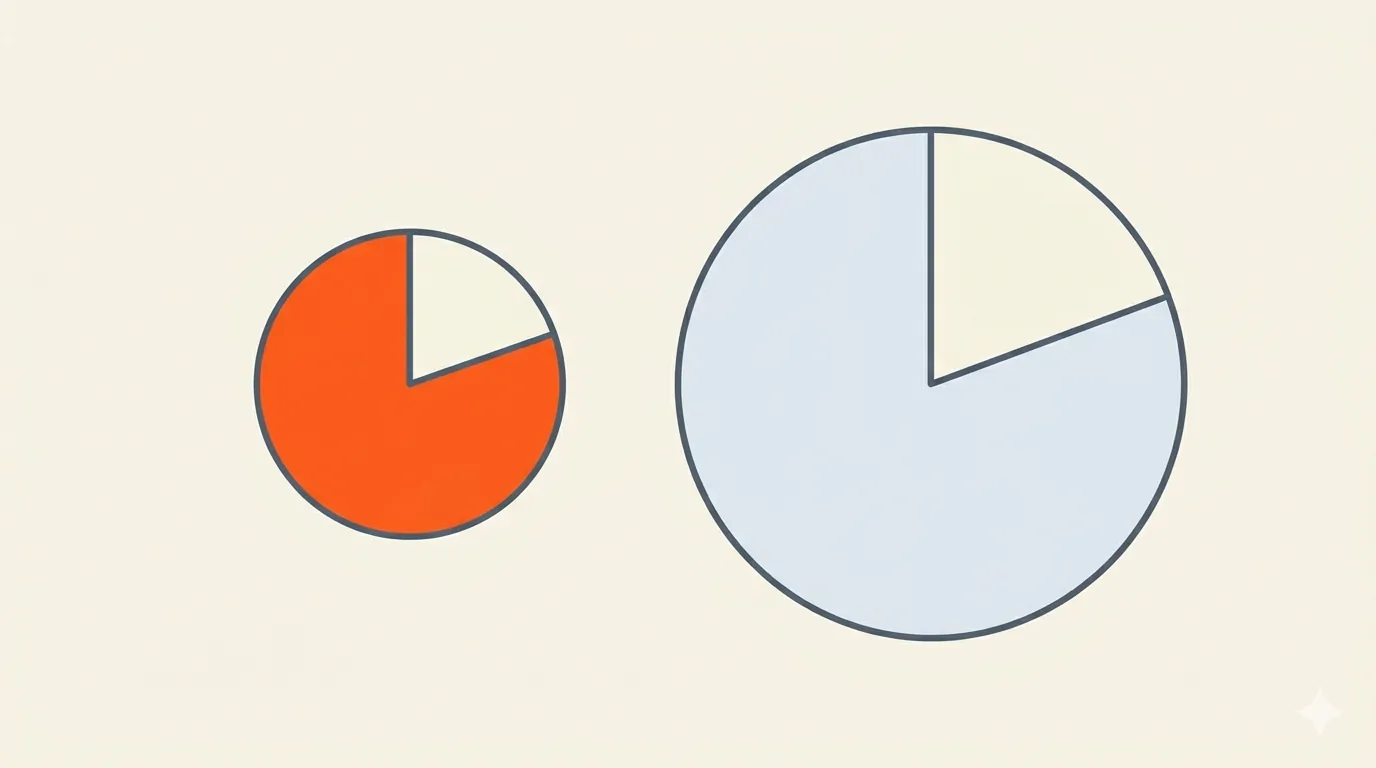
Two projects on 5 acres and 25 acres respectively can both truthfully claim 80% open space. The buyer experience in each case is not the same.
What the percentage measures
"80% open space" means that 80% of the total land area of the project is not covered by built structures at ground level. The remaining 20% is the building footprint — the ground-level area occupied by towers, amenity blocks, and covered infrastructure.
This is a legitimate metric. Ground coverage is a real determinant of how a project feels: the density of buildings relative to green space, the breathing room between towers. The problem is in what "open space" gets measured against, and how floors are counted.
The FSI relationship
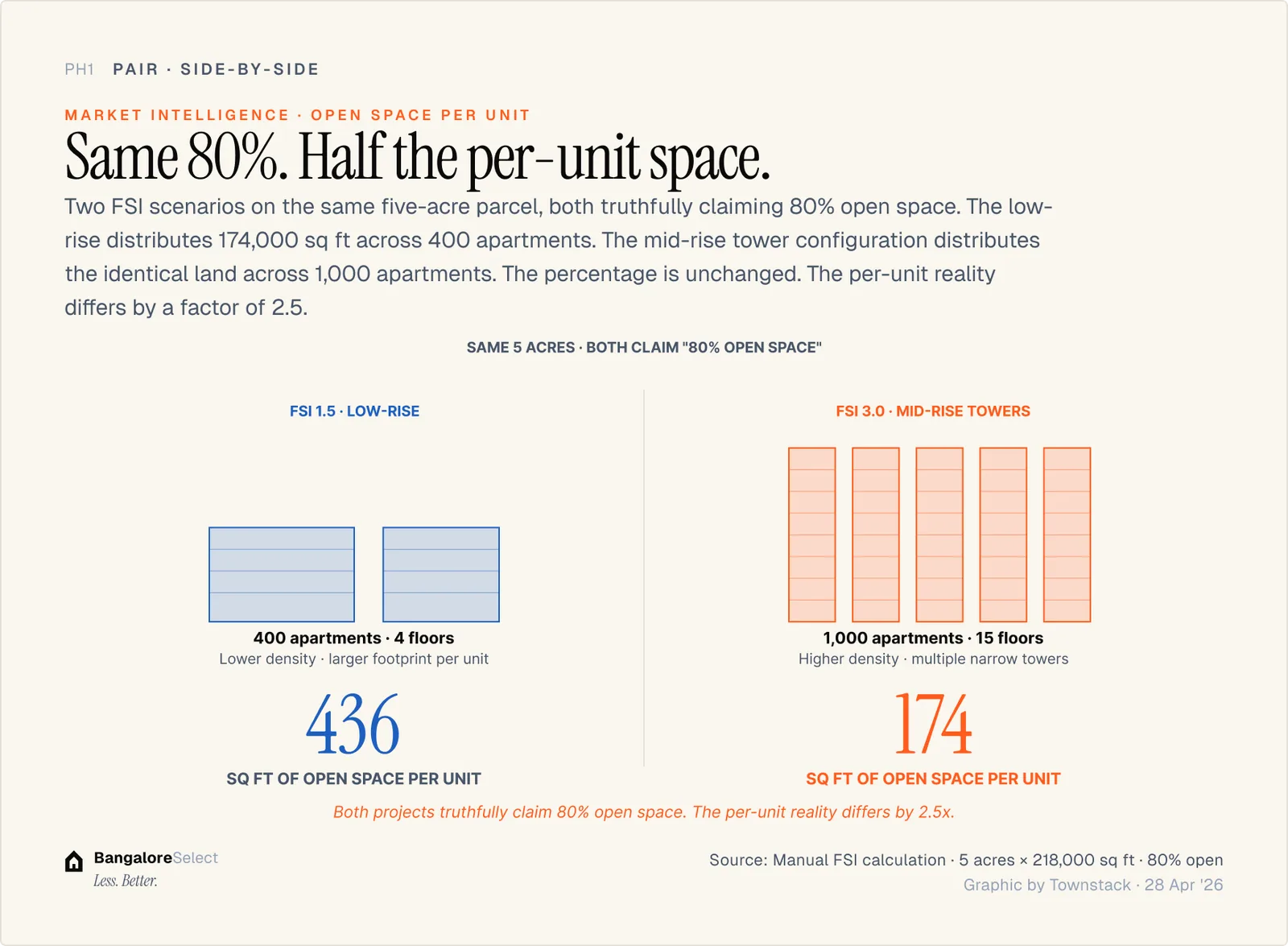
FSI (Floor Space Index) is the ratio of total built-up area to plot area. A 5-acre (218,000 sq ft) plot with an FSI of 3 permits 654,000 sq ft of total built-up space. A 20-acre plot with the same FSI permits 2,613,000 sq ft.
Apply 80% open space to both.
The 5-acre project builds its 654,000 sq ft on 20% of 218,000 sq ft, or 43,600 sq ft of ground footprint. To achieve 654,000 sq ft of built-up space on 43,600 sq ft of ground footprint, the towers must be 15 floors tall.
The 20-acre project builds its 2,613,000 sq ft of space on 20% of 871,000 sq ft, or 174,200 sq ft of ground footprint. The same 15-floor towers spread across four times the land. The open space per apartment is dramatically different, even though both projects show "80% open space" in the brochure.
The metric that makes open space claims comparable is not the percentage. It is green area per unit: sq ft of landscaped or open area divided by number of apartments.
The podium problem
In many current North Bangalore launches, towers sit on top of a podium level: a 1-3 floor base structure housing parking, back-of-house, and sometimes lower-level amenities. The residential towers rise from the podium, not from ground level.
When a developer claims 80% open space, the question is whether the podium counts as ground coverage. In strict area calculations, the podium footprint should count as built coverage. In practice, developers sometimes measure open space at the podium deck level — meaning the "open space" includes the roof of the parking structure, not actual ground-level green area.
This is not a regulatory violation. Podium construction is standard, legal, and in many projects functionally superior to ground-level parking. But the open space claim may be measuring a different level of the project than the buyer expects.
How to evaluate open space claims before buying
Three questions to ask the sales team:
What is the total project land area? This should match the RERA filing.
How many units in the total project? This should also match the RERA filing.
Is the open space figure calculated at ground level or at podium level?
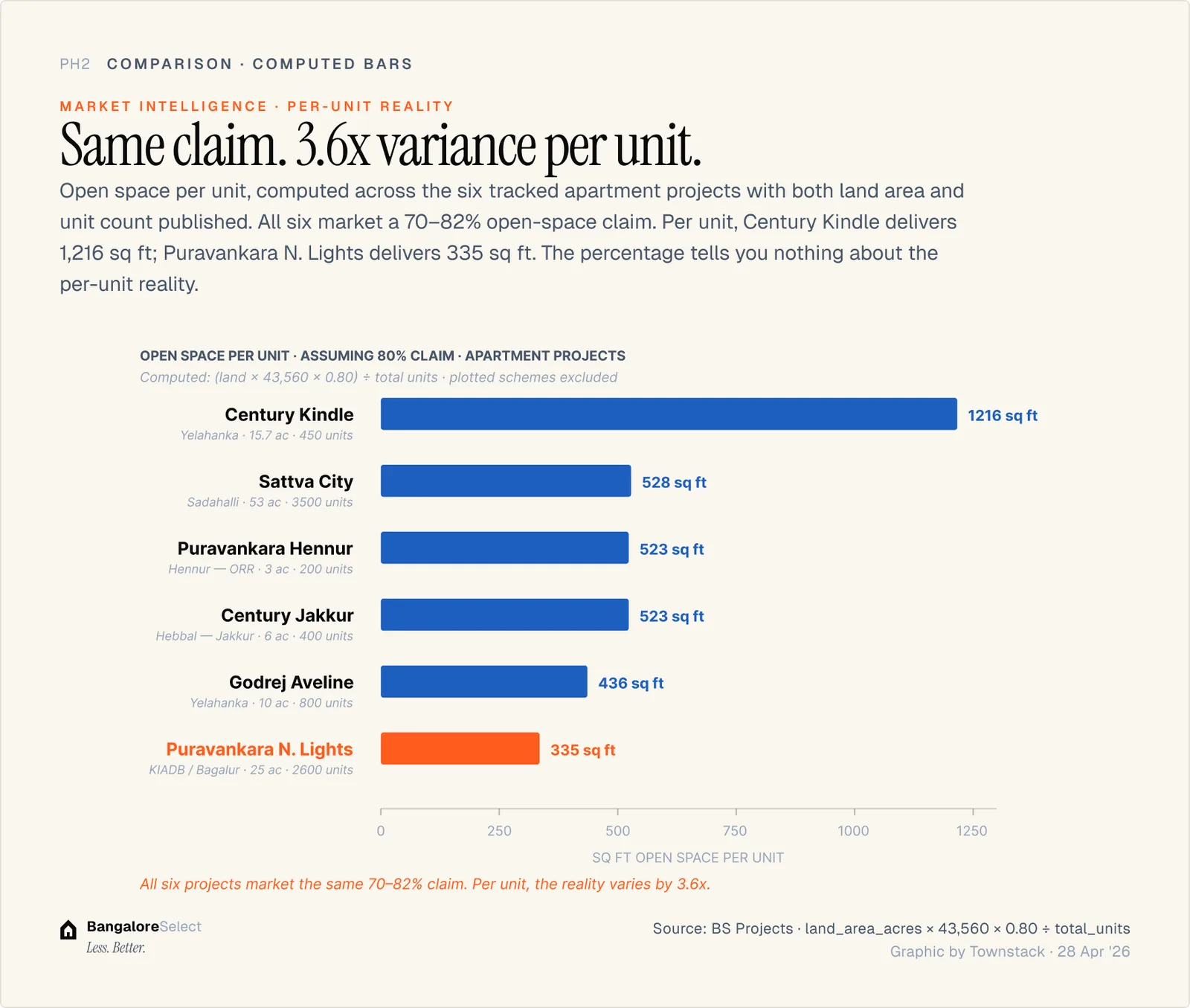
From the first two, calculate: (total land area × open space percentage) ÷ total units. This gives you open space per apartment in square feet. Compare this number across projects, not the percentage.
A project claiming 80% open space on 10 acres with 500 units gives each apartment 697 sq ft of open area. The same 80% claim on 8 acres with 2,000 units gives each apartment 174 sq ft.
What the two project types show
The open space claim is one of the few variables where project brochures across tracked North Bangalore projects are internally consistent but externally incomparable.
Birla Trimaya in Shettigere is the largest land parcel among the active apartment launches in the dataset. Its scale means the open space claim — whatever percentage is cited — translates to a higher per-unit number than a boutique project with the same percentage on a smaller parcel.
Boutique projects in Hebbal–Jakkur, by contrast, may claim 75% open space on a 3-acre parcel with 150 units. The per-unit calculation will likely still be favourable — because the unit count is low relative to the land.
The claim to interrogate is the mid-size project on 6–10 acres with 800–1,200 units. This is where the 80% claim and the per-unit reality diverge most significantly.
Ask for the per-unit number. If the sales team cannot give it to you, calculate it yourself from the RERA filing.
Sources: FSI norms: BBMP and BDA planning regulations. Open space declaration requirements: RERA Karnataka. Project land area and unit counts: RERA Karnataka filings.