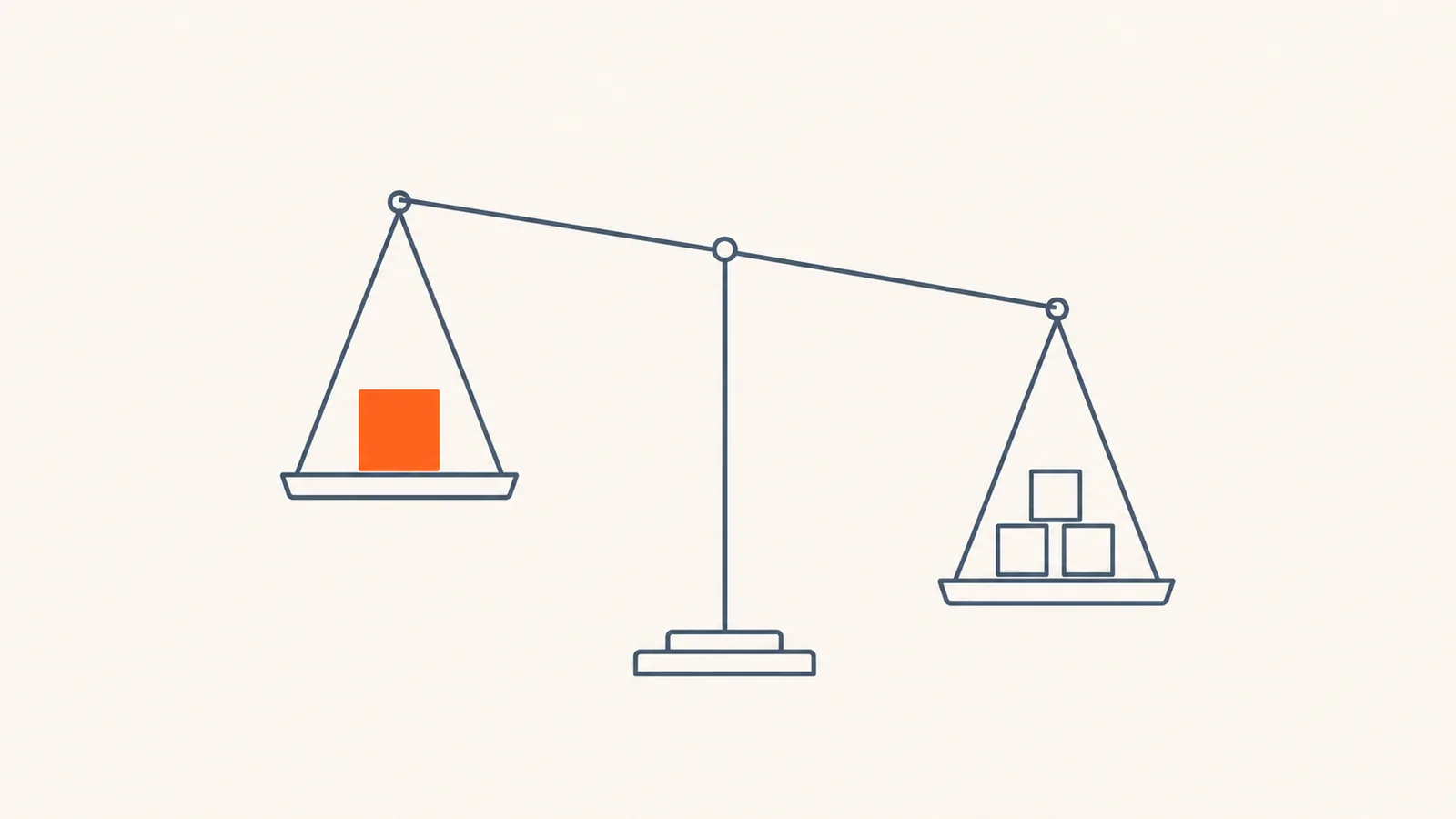
What RERA Actually Protects You From, and What It Doesn't
Karnataka RERA has been operational since 2017. The most common buyer misunderstanding: that RERA registration means a project is government-approved and quality-guaranteed. Here is what RERA actually protects — and what it does not.

Karnataka RERA has been operational since 2017. In the eight years since, the single most common buyer misunderstanding about RERA is this: that RERA registration means the project is approved, quality-checked, and government-backed.
RERA registration is not a government endorsement of project quality. It is not a guarantee of completion. It is not insurance against a builder going under. Knowing exactly which categories are protected — and which are not — changes how you evaluate a RERA-registered project.
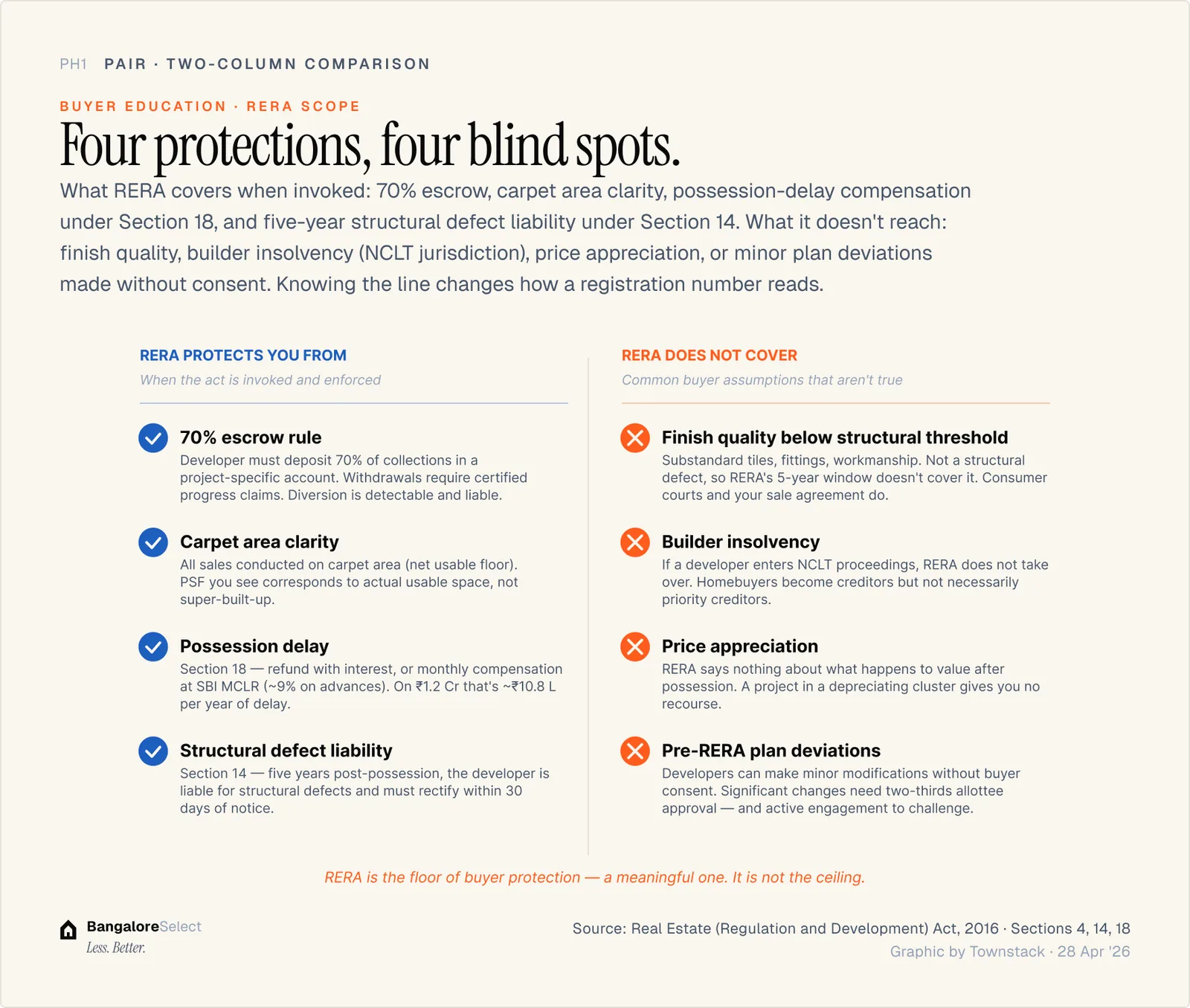
What RERA does protect you from
Financial diversion. The 70% escrow rule requires developers to deposit 70% of all collections into a project-specific RERA-designated account. That account can only be drawn upon for construction costs for that project. Before RERA, there was no structural barrier to developers using collections from one project to fund another, or to cover unrelated business costs.
Carpet area clarity. RERA mandates that all apartment sales be conducted on carpet area, defined specifically as the net usable floor area excluding walls, balconies, and common areas. Before RERA, "super built-up area" loading of 25–35% was standard practice, making PSF comparisons across developers effectively meaningless.
Possession delay compensation. If a RERA-registered project misses its declared possession date, Section 18 of the RERA Act entitles buyers to interest at the State Bank of India's marginal lending rate on all amounts paid, for the period of delay. In practice, claiming this compensation requires filing a complaint with RERA. The process is not automatic. But the right is statutory.
Structural defect liability. For five years after possession, the developer is liable for any structural defects brought to their attention. This covers the building's structural elements — foundation, columns, beams, slabs — not finish quality or fittings.
Quarterly disclosure. Developers must file quarterly progress reports on Karnataka RERA's public portal. These reports include construction progress photographs, unit sale status, and financial disclosures. You can check the progress of any registered project without calling the developer.
What RERA does not protect you from
Construction quality below structural thresholds. RERA's five-year defect liability covers structural defects. It does not cover finish quality — tile work, paint, plumbing fixtures, electrical fittings — that falls below promised specifications. These are governed by the sale agreement and consumer protection law, not RERA.
Builder insolvency. If a developer becomes insolvent during construction, the RERA process does not take over the project. The NCLT process governs insolvency. RERA escrow funds are ring-fenced but do not guarantee project completion if the developer has no working capital beyond the 70% account.
Price appreciation. RERA says nothing about what happens to your property's value after possession. A RERA-registered project in a cluster with declining absorption rates and oversupply will not outperform the market because it carries a RERA registration.
Pre-RERA plan deviations. Karnataka RERA allows developers to make minor modifications to sanctioned plans without buyer consent, up to a defined threshold. Significant changes require buyer consent. Minor changes do not. "Minor" has been litigated extensively.
How to verify registration before paying anything
Karnataka RERA registration numbers follow the format PRM/KA/RERA/1250/[project-specific number] or PRM/KA/RERA/1251/[project-specific number] depending on registration batch.
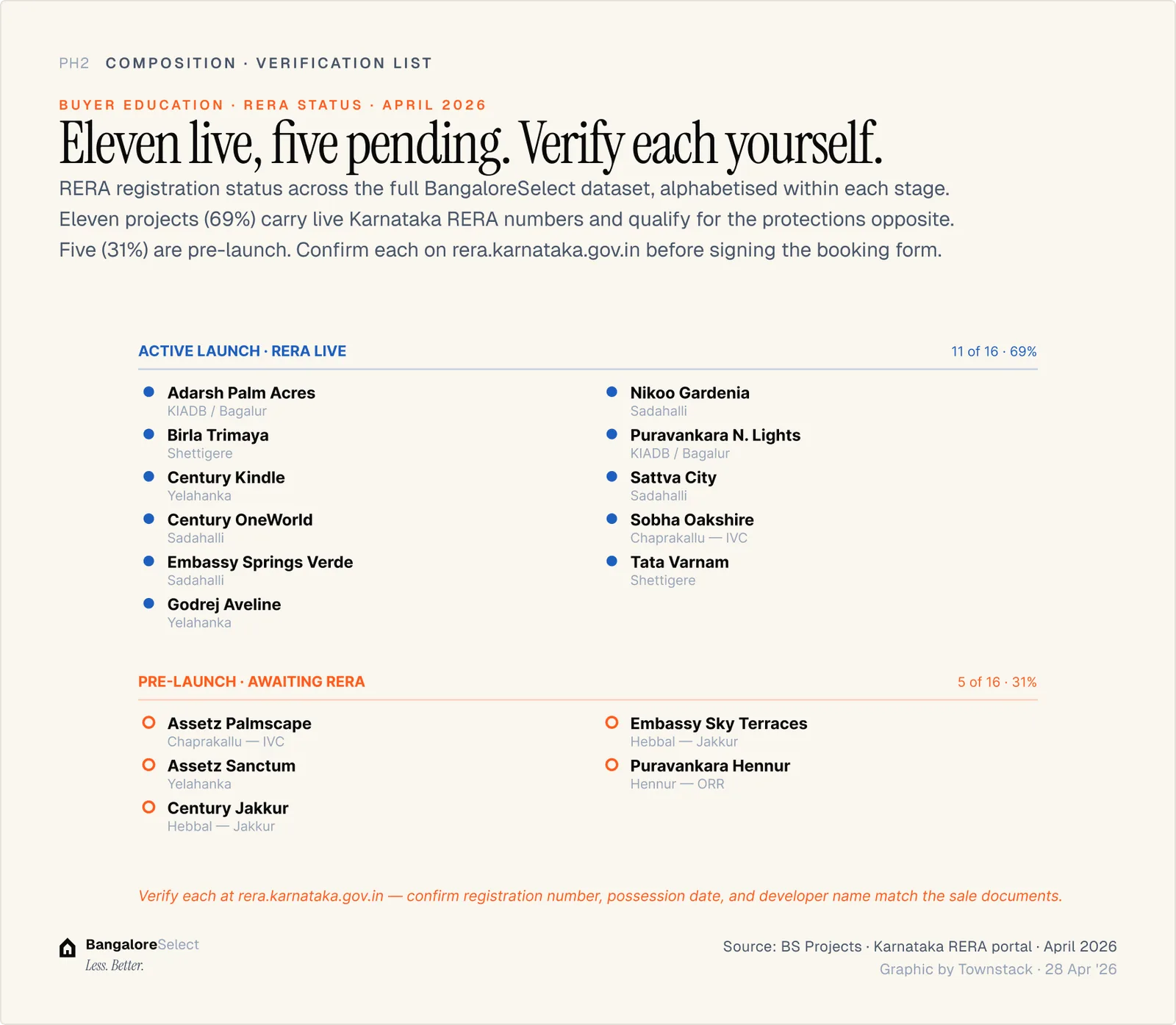
Search the project at rera.karnataka.gov.in before signing the booking form. Confirm the registration number matches the project name and developer as stated. Confirm the possession date on file. Confirm the total units approved matches the number being marketed.
If the project is not yet registered, verify that the developer has confirmed the registration filing timeline. The protections above apply only after registration is confirmed.
RERA is the floor of buyer protection in Indian real estate. A registered project with a reputable developer offers meaningful structural safeguards. It does not make due diligence optional.
Sources: RERA 70% escrow rule: Real Estate (Regulation and Development) Act, 2016, Section 4(2)(l)(D). Possession delay compensation: RERA Act, Section 18. Karnataka RERA portal: rera.karnataka.gov.in.